Why supplement stores lose sceptical shoppers
Supplements are one of the most crowded shelves online. The shopper is comparing several tabs, looking for a reason to rule you out, and will rarely ask a question before leaving.
- "High quality" sounds the same from every brand. When every listing makes the same claim, nothing separates your range from a cheaper rival.
- Ingredients and dosages are hard to find. Tucked into a tab at the bottom of the page, they can't do their job at the moment of decision.
- Shoppers don't understand the ingredient. Many visitors have never heard of what you sell, so the store has to teach and sell in the same scroll.
- Proof is missing at the point of sale. Testing, certifications and guarantees sit on a separate page nobody opens.
- Too many taps to the cart. Most supplement shopping starts on a phone, and every extra step between product and checkout costs orders.
What I build for supplement and health brands
- An evidence-first Shopify store. AI Shopify store development starts from $1,500. Product pages carry a scannable ingredient and dosage panel, testing and guarantees beside the price, and a clean mobile path from product to checkout. The Growth package, from $2,750, adds bundles, cross-sells and abandoned-cart and post-purchase flows. Scale, from $5,000, adds subscriptions for products people reorder every month.
- Education that gets found. AI SEO services from $600 a month cover product schema, content that answers what shoppers search before they buy, and AI search optimization so assistants can quote your pages.
- Campaigns that land somewhere useful. AI digital marketing from $700 a month pairs a paid channel, social posts and email with a landing page per campaign. You pay ad platforms directly, and I never take a percentage of your ad spend.
Product descriptions are generated with AI from a controlled dataset and held to your brand voice, so every product page sounds like the same brand.
Recent supplement and health food stores
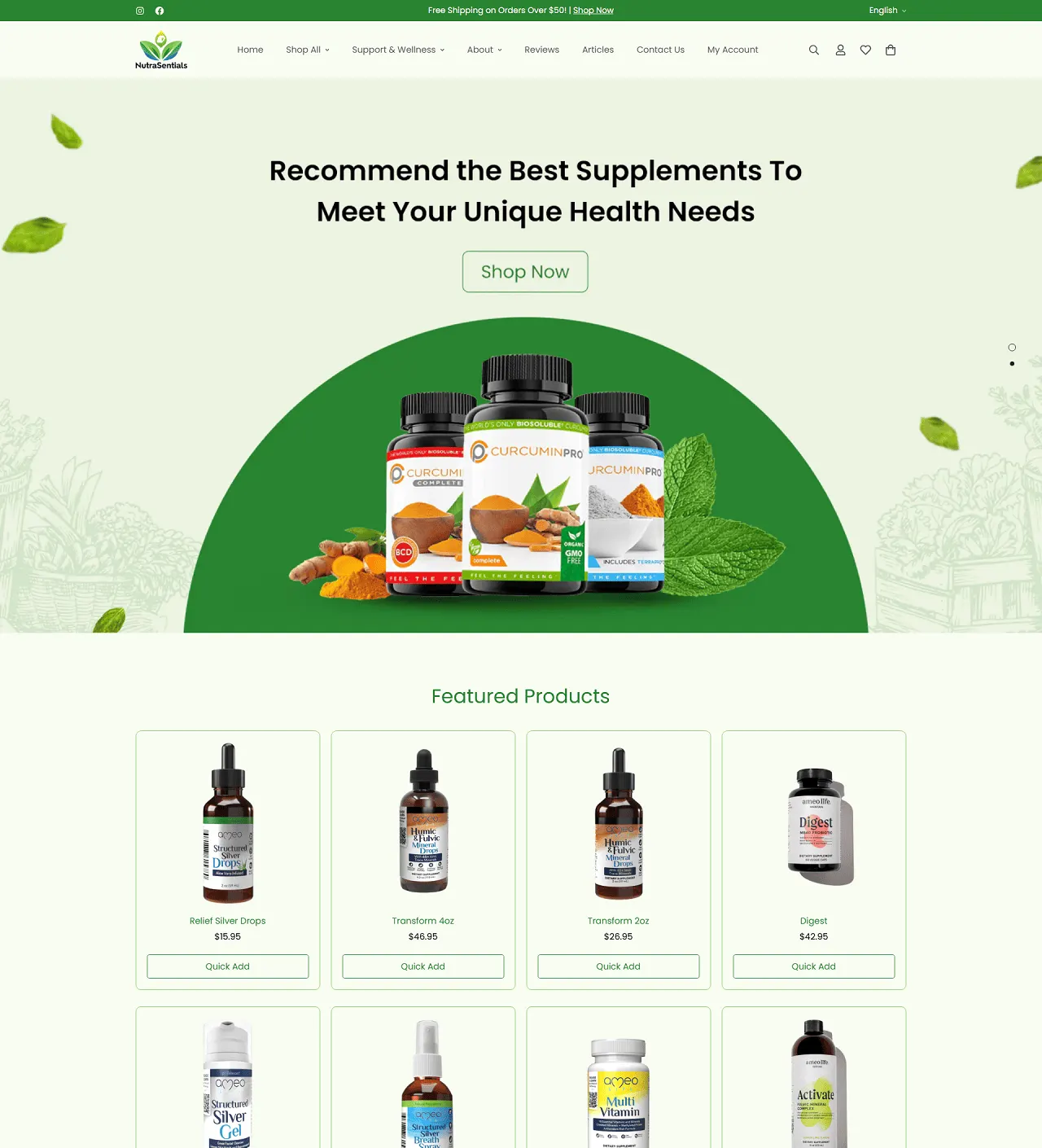
- NutraSentials: a wellness brand built on research-backed formulas with natural ingredients and real dosages. The Shopify store leads with the evidence: ingredients, dosages and sourcing above the buy button, a reason to believe on every listing and a journal linked from the products it supports. It was built and launched in four days.
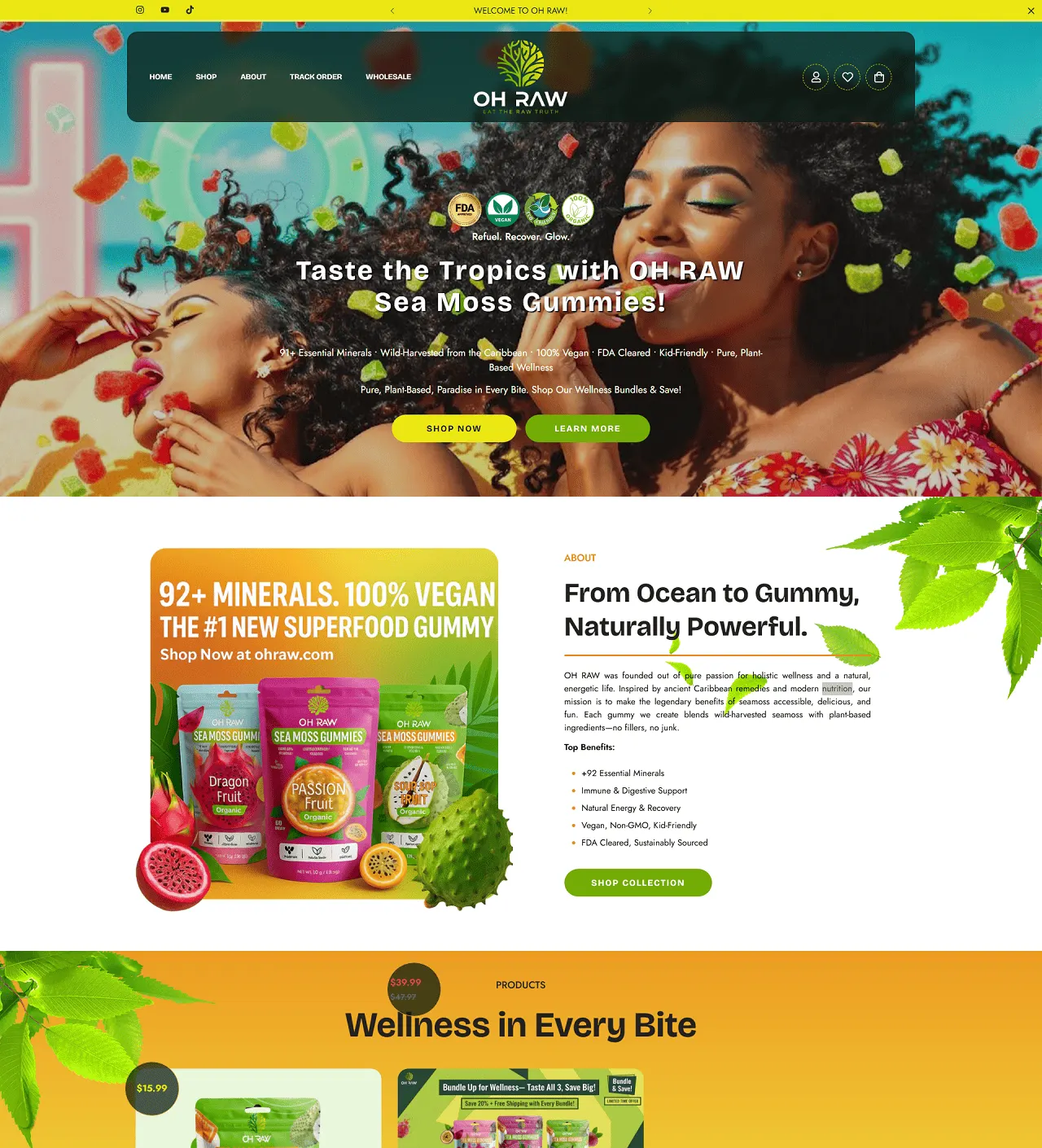
- Ohraw: a brand selling sea moss gummies in three flavours: soursop, dragon fruit and passion fruit. The rebuilt store explains what sea moss is on every product page, shows the 85 / 10 / 5 formula as a headline and puts testing and a 30-day guarantee beside the price. Quick add-to-cart, filtered browsing, a bundle upsell, a comparison table against five alternatives and a wholesale page complete the store.
How a supplement store project runs
- Discovery. Your products, customers, competitors and where sales are being lost today.
- Strategy. Store structure, product page template and automation, set out in a written proposal with a fixed price and an exact launch date.
- Build. The store, catalogue, cart and flows, including a full redirect map if you are moving from another platform.
- Launch. Testing, performance tuning and a handoff with documentation, recorded walkthroughs and training for whoever runs the store.
Most stores go live in 3 to 7 days, and the price never changes mid-project. Thirty days of post-launch care come with the Growth package, and ongoing optimisation is available but never required.
You work with me directly. I've shipped 1,400+ projects since 2014 for clients in 40+ countries. Book a free 30-minute call and I'll tell you what I would change first on your store and roughly what it would cost.