The client
Life Force Enterprise sells motivational apparel, drinkware, wall art and gifts: t-shirts, sweatshirts, mugs and prints that people buy for the words printed on them.
That is the whole difficulty. Nobody needs another mug. People buy the message, and most stores delete the message the moment a visitor enters the shop: a grid of thumbnails, a price and no voice.
The problem
A t-shirt, a mug and a framed print are three different purchases. Lumped into one catalogue, none of them get found.
- Four product types had no clear categories.
- The brand message vanished once shopping began.
- Mobile layouts were creating friction.
- Browsers were dropping out before checkout.
- Gift buyers and people buying for themselves wanted different things.
What we built
The brief: sort the categories, carry the voice into the shop and cut the taps between wanting something and owning it.
I rebuilt the store mobile-first as a Shopify store development project. It runs on the platform's native stack with a customised theme, so there is no page builder app slowing it down and nothing extra to keep paying for.
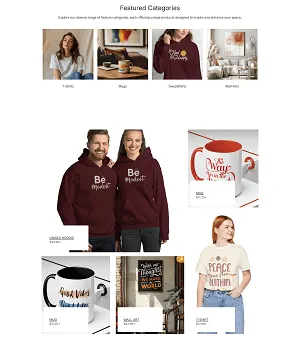
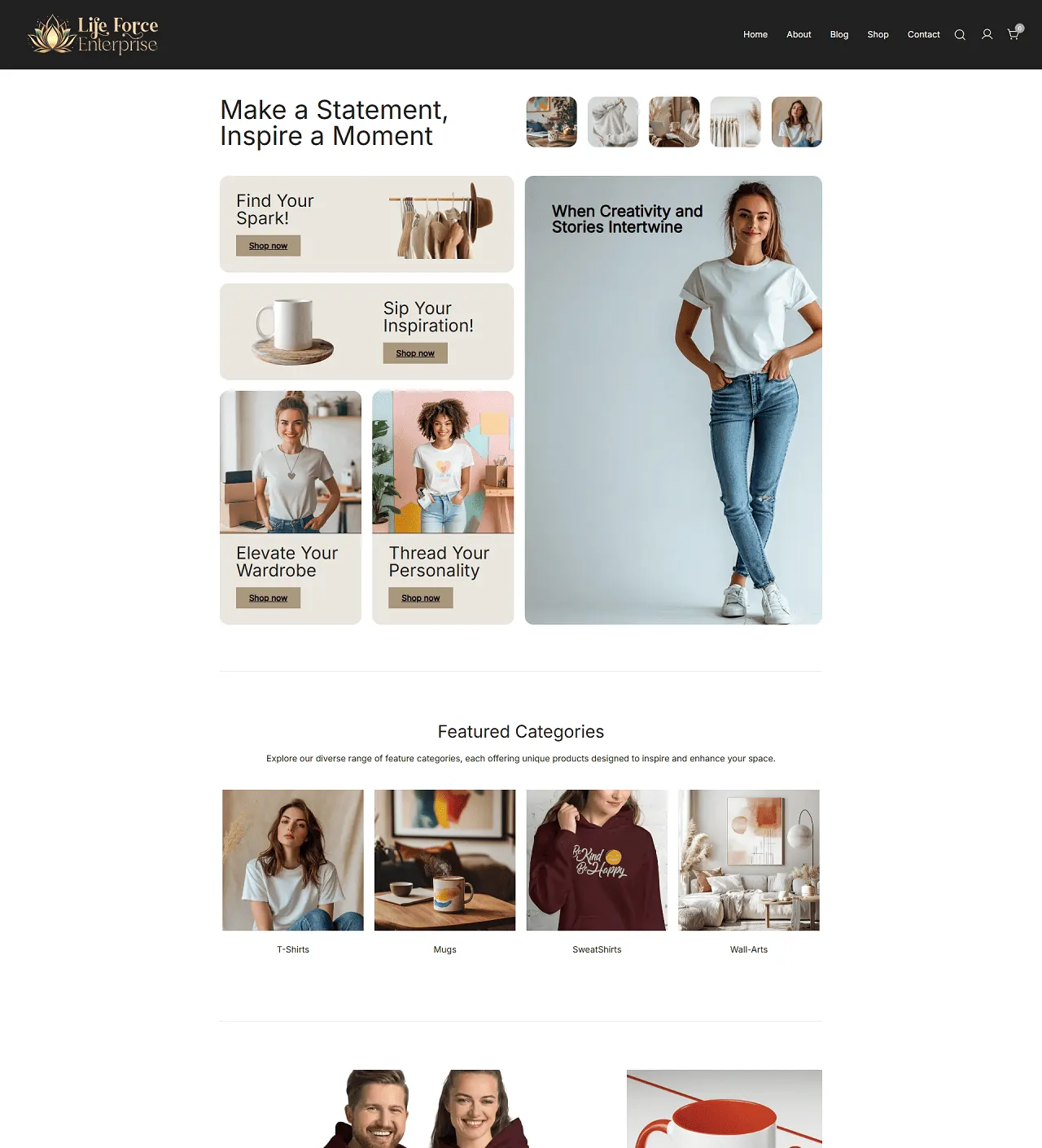
- Four clear doors. Apparel, drinkware, wall art and gifts are each browsable on their own terms, starting from featured categories on the homepage.
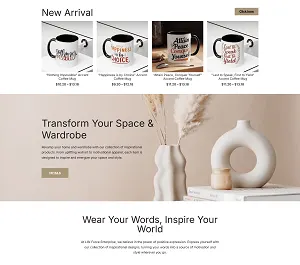
- The message stays in. The brand voice is carried into collections and product pages, not stranded on the homepage.
- A shorter path to cart. Filtering, sorting and quick add to cart cut the taps between wanting and buying.
- Reviews and newsletter capture. Social proof sits where people decide, and a sign-up keeps the conversation going after the first visit.
- Fully responsive. Rebuilt mobile-first, because gift shopping happens on a phone on the sofa.
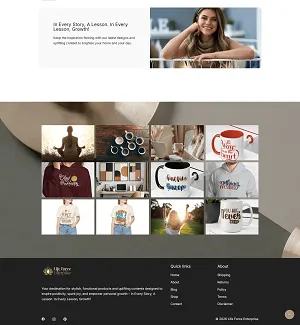
The homepage closes with a grid of the brand's social photos, so visitors see the products in use before they leave.
The result
Apparel, drinkware, wall art and gifts each have their own door now. A shopper who came for a mug is not wading through t-shirts to find one.
The message travels with them too. The reason someone buys an inspirational product is still on screen when they decide to buy it.
Products that sell on meaning need the meaning on every page, not only the homepage. It is the first thing I check when building Shopify stores for apparel and gift brands.
Stack
- Shopify